A rubber lining is only as good as its bond to the steel underneath it. Get the cure wrong and the lining blisters, lifts, or lets product reach the tank wall, usually long before anyone expects it to. Vulcanization is the step that decides whether a lining lasts decades or fails during a shutdown, so it is worth understanding what actually happens inside the vessel.
What Vulcanization Does
Vulcanization cures raw rubber sheet into a bonded, continuous barrier. At Moon Fabricating Corporation we cure every rubber lining using high-pressure steam vulcanization, which produces superior bonding and a consistent finish across the whole lined surface, not only the areas that are easy to reach.
The process is controlled with electronic monitoring so heat and pressure stay within the range the lining material requires from the first minute to the last. That consistency is the whole point. An uneven cure leaves weak areas that pass a visual inspection and then fail in service.
Two Vulcanizers, Two Jobs
Component size drives which vessel a lining is cured in, and we operate two:
- 12-foot diameter by 40-foot deep for larger components, including full tanks and long vessels.
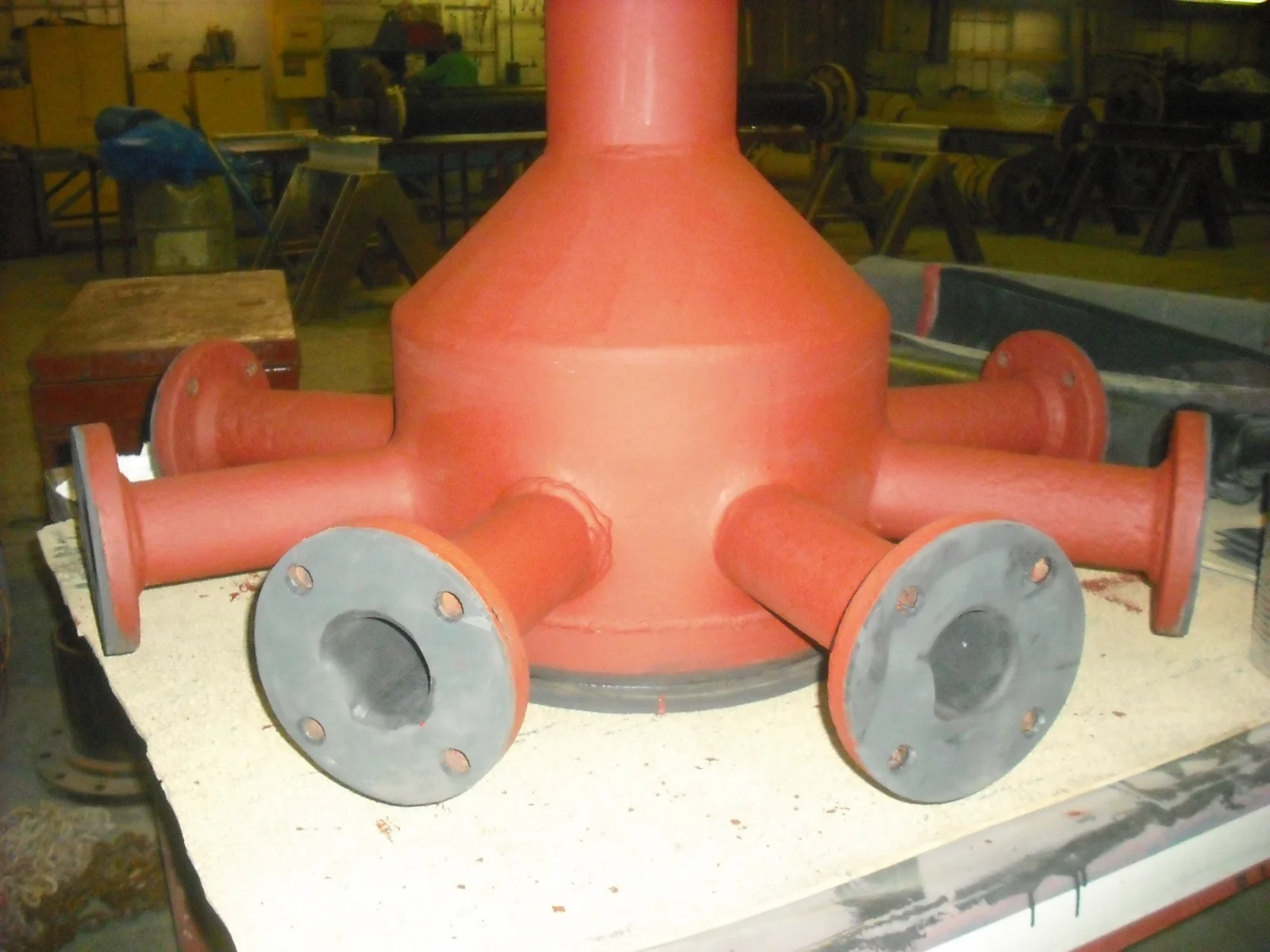
- 2-foot-6-inch diameter by 30-foot deep as a more economical option for smaller pieces, including pipe and fittings.
Having both matters more than it sounds. A short run of lined pipe should not have to occupy a 40-foot autoclave, and a large vessel should not have to be cured in sections because the only equipment available is too small.
Matching the Material to the Service
Vulcanized rubber is not a single product. Material selection is made against the chemistry, concentration, temperature, and abrasion your equipment will actually see. Alongside natural and synthetic rubber, we work with Hypalon, Chlorobutyl, Koroseal, PVC, Plastisol, Phenolic, vinyl ester, and fiberglass systems, plus specialty coatings.
For abrasive service such as mineral slurry, limestone slurry, fly ash, iron fines, coal, ore, and sand, abrasion-resistant rubber is the stronger choice. It holds up in ball mills, wheelabrators, and industrial shot blast cabinets, where erosive wear rather than chemical attack is what destroys equipment.
Surface Preparation Comes First
No cure compensates for poor preparation. Abrasive blasting and surface profiling are performed before lining so the rubber has the profile it needs to bond. On a relining project, the existing lining is fully removed and the surface prepared to the same standard a new lining requires.
Verifying the Result
A finished lining is checked rather than assumed. Depending on the project, inspection may include visual examination, spark testing, and holiday testing, which are electrical methods that locate pinholes and thin spots the eye cannot see. Findings are documented so there is a record for your own maintenance and compliance files.
Our rubber linings are installed to meet ASTM D7602, the industry standard covering rubber lining installation, inspection, and storage in metal tanks, pipes, and components.
Why the Applicator Matters
Moon Fabricating is an approved applicator for Blair Rubber Co. and Polycorp Ltd., two of North America’s largest rubber lining producers. That relationship strengthens material-selection support and warranty credibility. And because we fabricate the vessel and cure the lining in the same 60,000-square-foot facility in Kokomo, Indiana, lining access, nozzle placement, and weld profiles are accounted for before the steel is cut rather than discovered afterwards.
One supplier. One point of responsibility. From raw steel through decades of corrosion protection.
Have a tank, pipe run, or component that needs lining or relining? Call Moon Fabricating Corporation at (765) 459-4194 or request a quote online.